
ABC vs. ABA Blown Film Machine: Which 3-Layer Technology Is Right for Your Production?
Choosing a three-layer blown film machine is an important decision for plastic film manufacturers. At first glance, ABC and ABA Blown Film Machines may appear similar because both use three-layer co-extrusion technology. However, the difference between A-B-A and A-B-C structures can have a major impact on material selection, film performance, production flexibility, and the types of products a manufacturer can produce.
For manufacturers planning to upgrade their film production line, the question is not simply which machine is more advanced. The more important question is: Which three-layer structure is better suited to your products, materials, and long-term production goals?
As a professional plastic machinery supplier, SINOWIN provides blown film solutions designed around different production requirements. Understanding the differences between ABA and ABC technology can help buyers make a more informed equipment investment.
Table of Contents
ToggleABC and ABA: Two Different Approaches to Three-Layer Film
Both machines produce three-layer films, but their layer structures are fundamentally different.
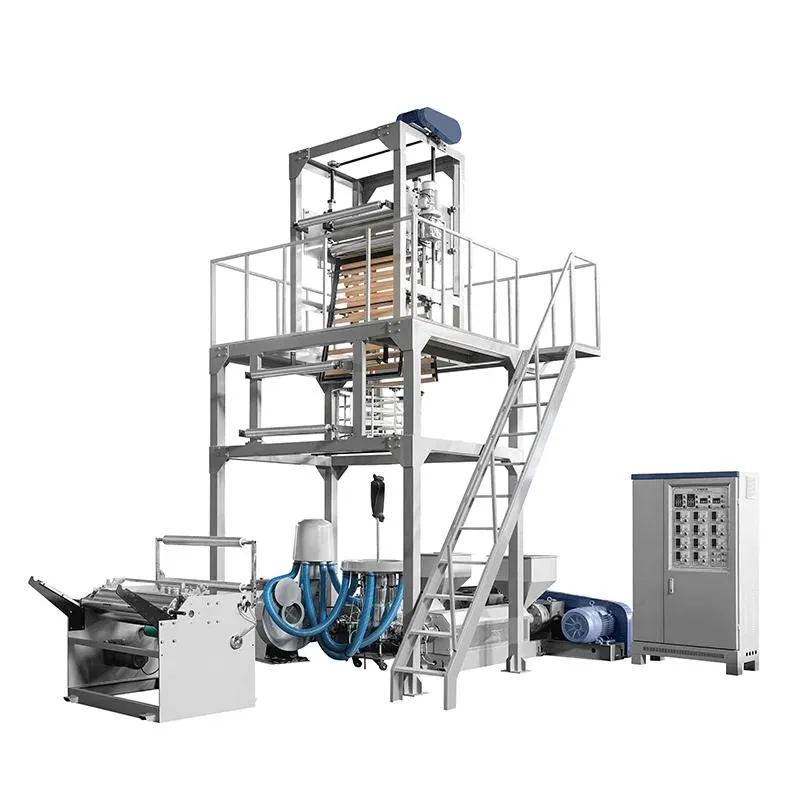
An ABA Blown Film Machine produces an A-B-A structure. The outer and inner layers use the same material source, while the middle layer uses a different material. In many configurations, two extruders are used to create the three-layer structure.
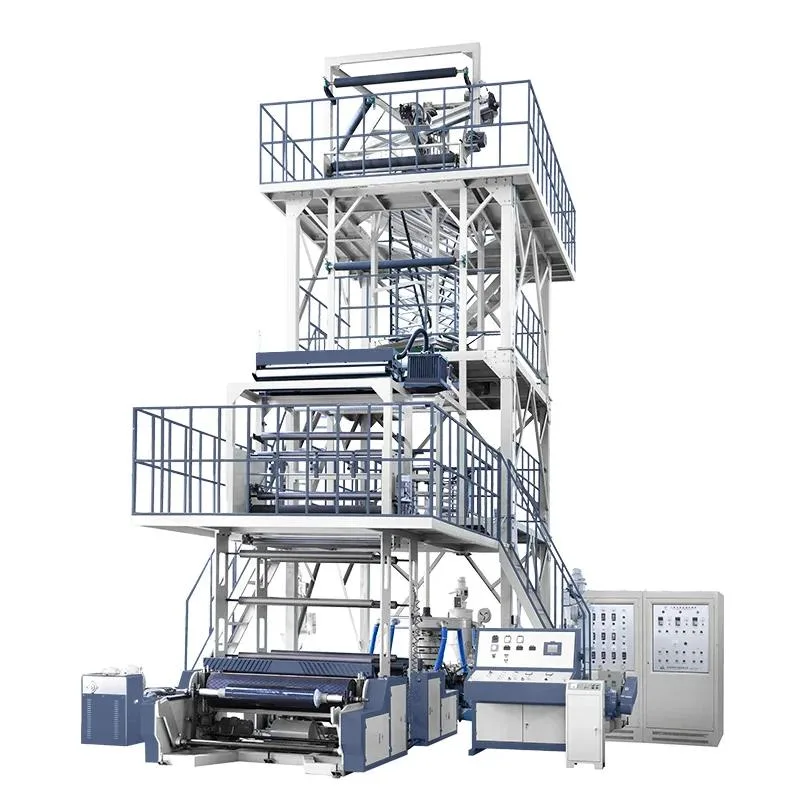
An ABC 3-Layer Film Blown Machine, on the other hand, produces an A-B-C structure. Each layer can be supplied by an independent extruder, allowing three different material formulations to be combined into one film.
This difference may look simple, but it creates very different possibilities for film design.
ABA Structure
A + B + A
- Two main material systems
- Same material family for both surface layers
- Different material in the core
- Often focused on cost-efficient film production
ABC Structure
A + B + C
- Three independent material layers
- Greater flexibility in material combinations
- Each layer can be assigned a specific function
- Better suited to applications requiring differentiated layer performance
In other words, ABA focuses on making a three-layer film efficiently, while ABC provides greater freedom in designing what each layer does.
When Does ABA Make More Sense?
ABA technology can be an attractive solution when cost control is a major production objective.
For example, manufacturers producing shopping bags, garbage bags, and other general packaging products may want to place recycled material or lower-cost formulations in the middle layer while maintaining suitable surface properties on the outside.
The A layers can provide the required surface appearance, sealing, or printability, while the B layer can be optimized for cost or mechanical performance.
This makes ABA particularly attractive for manufacturers that want the benefits of multilayer film without the additional complexity of three completely independent material systems. Some industry configurations specifically use the core layer for recycled materials or fillers while maintaining higher-quality surface layers.
For a manufacturer whose main priorities are:
- Lower material costs
- Stable bag production
- High-volume output
- Recycled material utilization
- Straightforward three-layer production
an ABA Blown Film Machine may be the practical choice.
Where ABC Technology Has the Advantage
The major advantage of an ABC Blown Film Machine is material flexibility.
Because the A, B, and C layers can be independently controlled, manufacturers can design each layer around a specific requirement.
For example:
Layer A – Outer Layer
The outer layer may be designed for:
- Good surface appearance
- Printability
- Abrasion resistance
- Surface characteristics
Layer B – Core Layer
The middle layer can focus on:
- Mechanical strength
- Toughness
- Material optimization
- Functional additives
Layer C – Inner Layer
The inner layer may be designed for:
- Heat sealing
- Flexibility
- Slip performance
- Specific contact requirements
This allows manufacturers to build a film around its required performance instead of using essentially the same material for both outer surfaces.
Three independent extrusion systems also make ABC technology suitable for applications where different material combinations are required.
ABC vs. ABA: A Practical Comparison
| Factor | ABA Blown Film Machine | ABC Blown Film Machine |
|---|---|---|
| Film structure | A-B-A | A-B-C |
| Independent material layers | Two material systems | Three material systems |
| Material flexibility | Moderate | High |
| Production focus | Cost-efficient films | Functional and customized films |
| Recycled material utilization | Strong potential | Flexible depending on formulation |
| Layer function control | Limited compared with ABC | More independent |
| Equipment complexity | Relatively lower | Relatively higher |
| Typical investment | Lower | Higher |
| Suitable for | General packaging and bags | Specialty and higher-performance films |
The comparison does not mean that ABC is always better than ABA. Instead, the two technologies serve different production strategies.
Think About the Final Film, Not Just the Machine
One of the most common mistakes when purchasing a 3 Layer Blown Film Machine is choosing equipment before clearly defining the final film requirements.
Manufacturers should first determine what they want the film to achieve.
For example, if the primary objective is producing cost-effective garbage bags with a high proportion of recycled material in the core, an ABA configuration may provide an efficient solution.
If the film requires three independently designed layers, however, ABC technology can provide more flexibility.
This is particularly relevant when manufacturers want to produce different film products on the same production line. With independent extrusion systems, ABC equipment can offer more possibilities for adjusting material combinations according to different orders.
ABC Technology for Higher-Value Film Production
As packaging requirements become more sophisticated, manufacturers are increasingly looking beyond basic film production.
Customers may expect packaging films to combine several characteristics at the same time:
- Good mechanical strength
- Excellent sealing performance
- Attractive appearance
- Reliable printability
- Controlled material cost
- Specific functional properties
Achieving all of these characteristics with one material can be difficult.
A multi-layer structure provides another approach: assign different responsibilities to different layers.
This is where ABC technology becomes especially valuable.
Instead of making the entire film from a premium material, manufacturers can place higher-value materials only where they are needed and use other formulations for the remaining layers. This layer-by-layer approach can help balance performance and material cost.
What Should You Consider Before Buying?
Before choosing between an ABA and ABC Film Blown Machine, buyers should prepare several key pieces of information.
1. What Materials Will You Use?
Consider whether production will involve:
- LDPE
- LLDPE
- HDPE
- Recycled materials
- Masterbatch
- Functional additives
Material compatibility should be confirmed before selecting the extrusion configuration.
2. What Film Are You Producing?
The final application determines the required film properties.
A machine designed mainly for standard shopping bags may have different requirements from one producing agricultural film, industrial packaging film, or higher-performance packaging materials.
3. What Is Your Production Strategy?
Ask whether your priority is:
Lower investment + cost-efficient production or Higher flexibility + more complex film structures
The answer can help determine whether ABA or ABC is the more appropriate technology.
4. What Will Your Business Need in the Future?
A machine is a long-term investment. Manufacturers should consider not only today’s products but also potential future applications.
If your product portfolio is expected to expand toward more specialized films, the greater material flexibility of ABC technology may provide additional opportunities.
Why Choose SINOWIN for Three-Layer Film Production?
At SINOWIN, we understand that there is no single blown film machine suitable for every manufacturer.
The right equipment depends on raw materials, film structure, target output, film width, thickness, application, and production strategy.
SINOWIN focuses on providing practical plastic film production solutions that help customers match machine configuration with real manufacturing requirements.
For manufacturers considering an ABC 3-Layer Film Blown Machine, the goal is not simply to add another extrusion unit. It is to create a more flexible production system in which each layer can contribute to the final performance of the film.
This approach can give manufacturers greater freedom when developing new film products and responding to changing customer requirements.
Making the Right Investment Decision
The choice between ABA and ABC should ultimately be based on the business model behind the production line.
Choose ABA when your priority is efficient three-layer film production, material cost optimization, and applications where the outer layers can share the same material.
Choose ABC when you need greater control over individual layers and want to combine three different material functions within one film structure.
Neither technology is universally better. The right choice is the one that matches your products, materials, customers, and future development plans.
Conclusion
The difference between ABC and ABA Blown Film Machines goes beyond the letters used to describe their layer structures. It represents two different approaches to film manufacturing.
ABA provides an efficient way to produce three-layer films while focusing on cost control and stable production. ABC provides greater independence between the three layers, giving manufacturers more freedom to combine materials and develop films with different functional characteristics.
For companies looking to expand their product range and produce more specialized film structures, an ABC 3-Layer Film Blown Machine can provide valuable production flexibility.
With professional plastic machinery solutions and a focus on practical customer requirements, SINOWIN continues to support manufacturers in building efficient and flexible film production lines for today’s competitive packaging market.